< ISS024-E-9526 >

| NASA Photo ID | ISS024-E-9526 |
| Focal Length | 100mm |
| Date taken | 2010.07.25 |
| Time taken | 21:57:57 GMT |
Resolutions offered for this image:
1000 x 667 pixels 540 x 360 pixels 720 x 480 pixels 2800 x 1920 pixels 640 x 439 pixels
1000 x 667 pixels 540 x 360 pixels 720 x 480 pixels 2800 x 1920 pixels 640 x 439 pixels



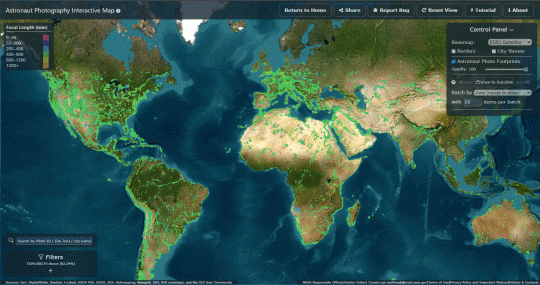
Spacecraft nadir point: 45.6° N, 114.2° W
Photo center point: 46.3° N, 113.9° W
Photo center point by machine learning: 46.33° N, 113.91° W
Photo center point: 46.3° N, 113.9° W
Photo center point by machine learning: 46.33° N, 113.91° W
Nadir to Photo Center: North
Spacecraft Altitude: 186 nautical miles (344km)
Country or Geographic Name: | USA-MONTANA |
Features: | WILLOW MOUNTAIN, DOMINIC POINT FIRE, SMOKE PLUME |
| Features Found Using Machine Learning: | |
Cloud Cover Percentage: | 10 (1-10)% |
Sun Elevation Angle: | 52° |
Sun Azimuth: | 238° |
Camera: | Nikon D3X Electronic Still Camera |
Focal Length: | 100mm |
Camera Tilt: | 14 degrees |
Format: | 6048E: 6048 x 4032 pixel CMOS sensor, 35.9mm x 24.0mm, total pixels: 25.72 million, Nikon FX format |
Film Exposure: | |
| Additional Information | |
| Width | Height | Annotated | Cropped | Purpose | Links |
|---|---|---|---|---|---|
| 1000 pixels | 667 pixels | No | No | Earth From Space collection | Download Image |
| 540 pixels | 360 pixels | Yes | No | Earth From Space collection | Download Image |
| 720 pixels | 480 pixels | Yes | Yes | NASA's Earth Observatory web site | Download Image |
| 2800 pixels | 1920 pixels | No | No | Download Image | |
| 640 pixels | 439 pixels | No | No | Download Image |
Download Packaged File
Download a Google Earth KML for this Image
View photo footprint information
No GeoTIFF is available for this photo.Image Caption: Dominic Point Fire, Montana
Lightning strikes and human activities in the forested mountains of the western United States can spark wildfires during the summer dry season. The Dominic Point Fire was first reported near 3:00 p.m. local time on Sunday, July 25, 2010. Approximately one hour later, the International Space Station crew photographed the fire's large smoke plume--already extending at least 8 kilometers (5 miles) to the east--from orbit as the station passed almost directly overhead. Forest Service fire crews, slurry bombers, and helicopters were on the scene by that evening.
The fire may have been started by a lightning strike, as there are no trails leading into the fire area located approximately 22 kilometers (14 miles) northeast of Hamilton, Montana, according to local reports. As of July 26, 2010, the fire had burned approximately 700 to 1,000 acres (283 to 405 hectares) of the Bitterroot National Forest in western Montana. The fire is thought to have expanded quickly due to high temperatures, low humidity, and favorable winds with an abundance of deadfall--dead trees and logs that provide readily combustible fuels--in the area.
Lightning strikes and human activities in the forested mountains of the western United States can spark wildfires during the summer dry season. The Dominic Point Fire was first reported near 3:00 p.m. local time on Sunday, July 25, 2010. Approximately one hour later, the International Space Station crew photographed the fire's large smoke plume--already extending at least 8 kilometers (5 miles) to the east--from orbit as the station passed almost directly overhead. Forest Service fire crews, slurry bombers, and helicopters were on the scene by that evening.
The fire may have been started by a lightning strike, as there are no trails leading into the fire area located approximately 22 kilometers (14 miles) northeast of Hamilton, Montana, according to local reports. As of July 26, 2010, the fire had burned approximately 700 to 1,000 acres (283 to 405 hectares) of the Bitterroot National Forest in western Montana. The fire is thought to have expanded quickly due to high temperatures, low humidity, and favorable winds with an abundance of deadfall--dead trees and logs that provide readily combustible fuels--in the area.