< ISS002-728C-79 >
| NASA Photo ID | ISS002-728C-79 |
| Focal Length | 250mm |
| Date taken | 2001.07.22 |
| Time taken | GMT |
Resolutions offered for this image:
516 x 387 pixels 4127 x 4096 pixels 2063 x 2048 pixels 1031 x 1024 pixels 515 x 512 pixels 6891 x 6849 pixels 640 x 636 pixels 400 x 398 pixels
516 x 387 pixels 4127 x 4096 pixels 2063 x 2048 pixels 1031 x 1024 pixels 515 x 512 pixels 6891 x 6849 pixels 640 x 636 pixels 400 x 398 pixels
Cloud masks available for this image:
Spacecraft nadir point:
Photo center point: 37.5° N, 15.0° E
Photo center point by machine learning:
Photo center point: 37.5° N, 15.0° E
Photo center point by machine learning:
Nadir to Photo Center:
Spacecraft Altitude: nautical miles (0km)
Country or Geographic Name: | SICILY |
Features: | MOUNT ETNA VOLCANO PLUME |
| Features Found Using Machine Learning: | |
Cloud Cover Percentage: | 10 (1-10)% |
Sun Elevation Angle: | ° |
Sun Azimuth: | ° |
Camera: | Hasselblad |
Focal Length: | 250mm |
Camera Tilt: | |
Format: | 5069: Kodak Elite 100S, E6 Reversal, Replaces Lumiere, Warmer in tone vs. Lumiere |
Film Exposure: | |
| Additional Information | |
| Width | Height | Annotated | Cropped | Purpose | Links |
|---|---|---|---|---|---|
| 516 pixels | 387 pixels | Yes | Yes | NASA's Earth Observatory web site | Download Image |
| 4127 pixels | 4096 pixels | No | No | Download Image | |
| 2063 pixels | 2048 pixels | No | No | Download Image | |
| 1031 pixels | 1024 pixels | No | No | Download Image | |
| 515 pixels | 512 pixels | No | No | Download Image | |
| 6891 pixels | 6849 pixels | No | No | Public Affairs Office (PAO) | Download Image |
| 640 pixels | 636 pixels | No | No | Public Affairs Office (PAO) | Download Image |
| 400 pixels | 398 pixels | No | No | Photographic Highlights | Download Image |
Download Packaged File
Download a Google Earth KML for this Image
View photo footprint information
No GeoTIFF is available for this photo.Image Caption: ISS002-728C-79 Mt. Etna, Sicily
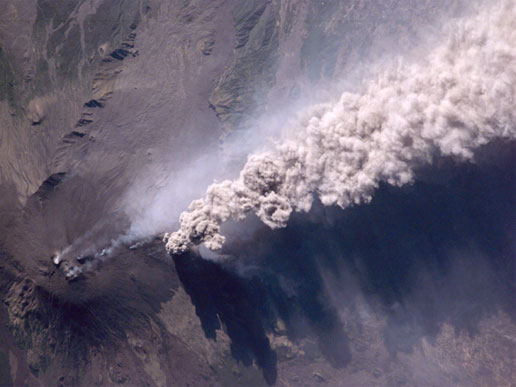
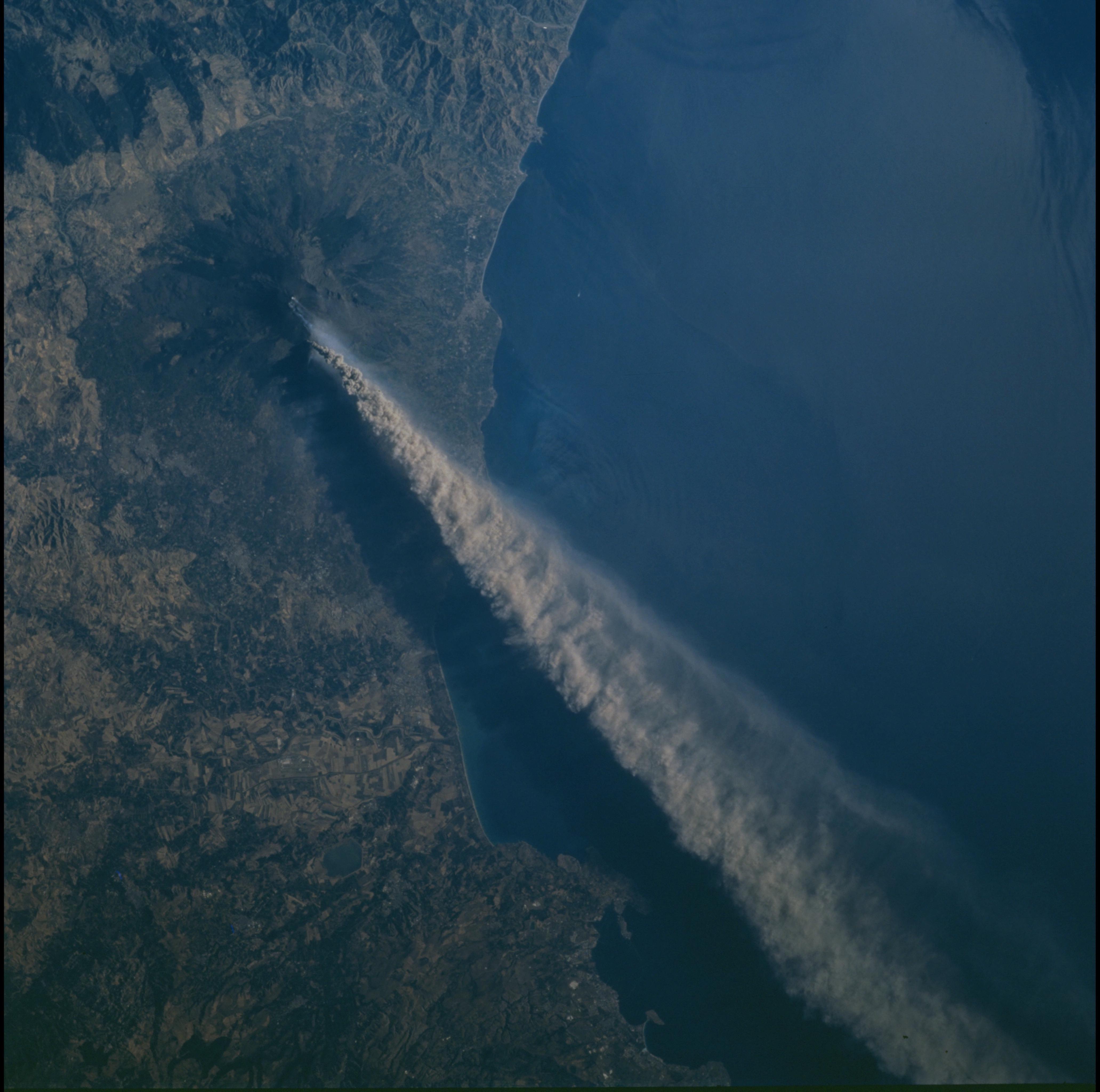
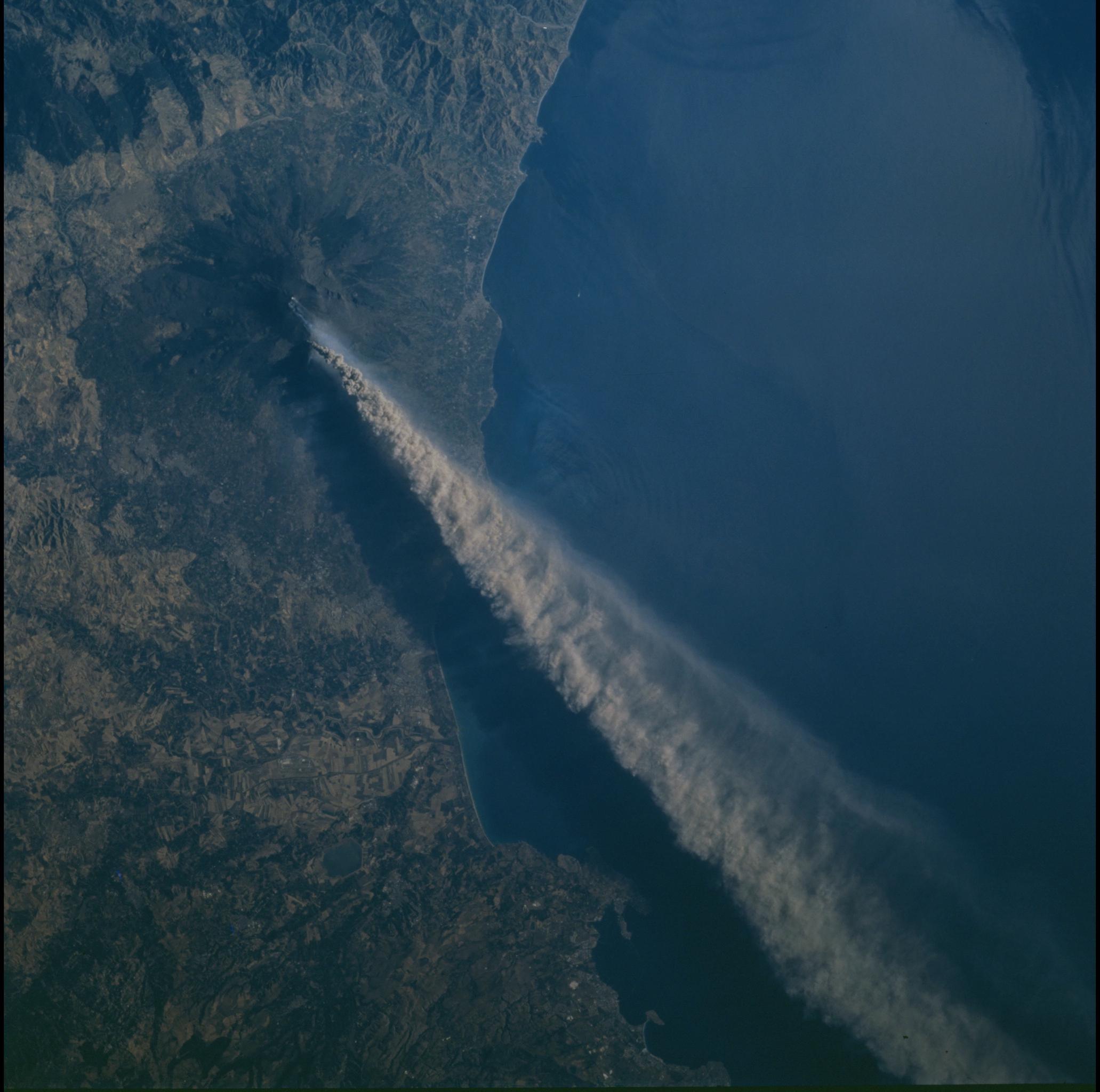
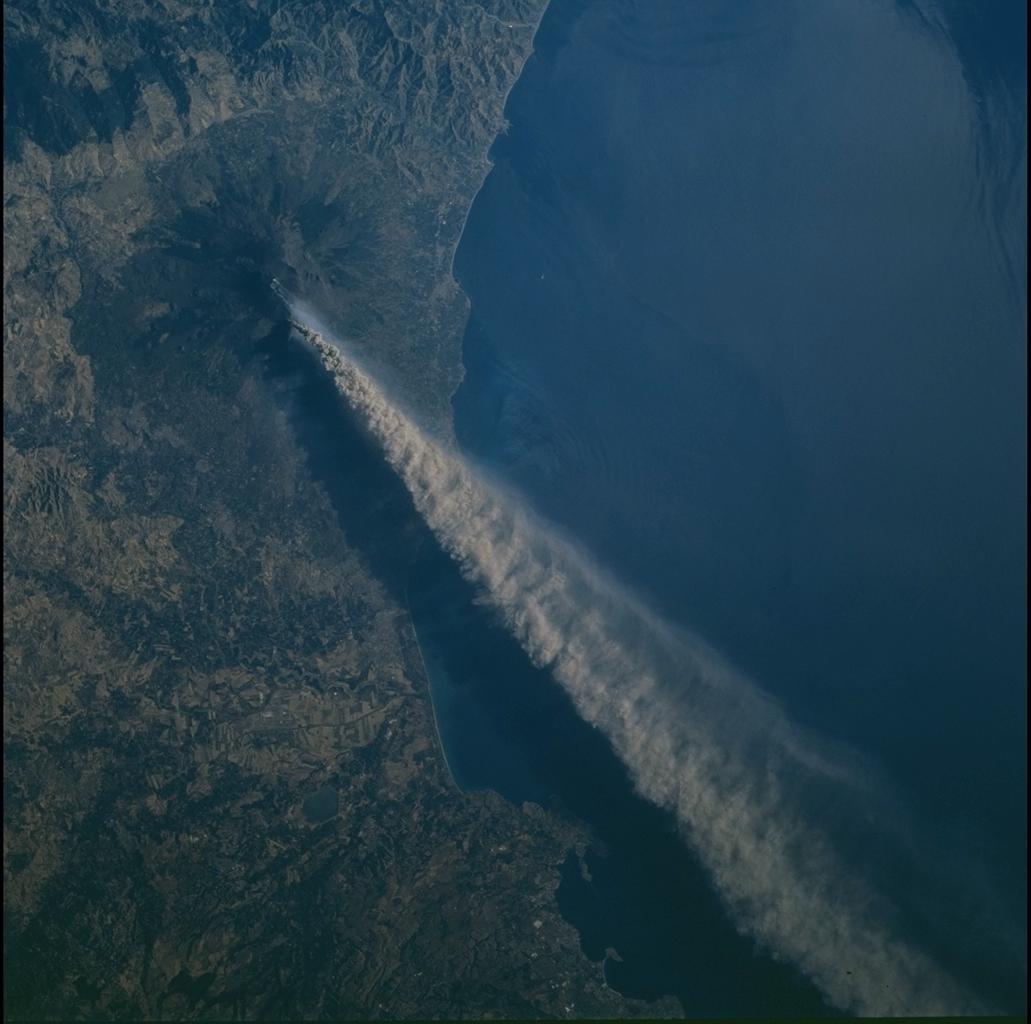
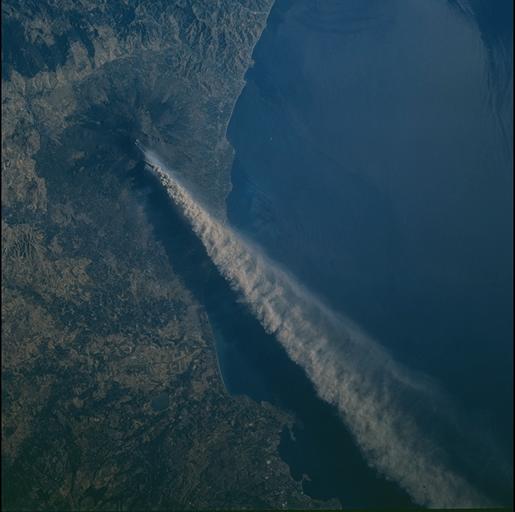

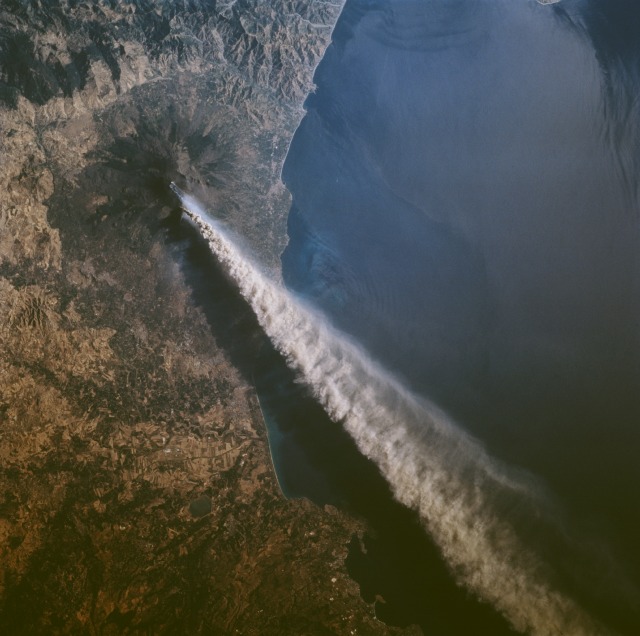
Two distinct airborne plumes are being generated from different source areas in this near vertical image of Mt. Etna. Notice that the lighter colored smoke plume is coming from the summit craters, while the darker colored and higher (in elevation) plume is an ash plume that is exiting the volcano through an eruptive fissure on the south flank of the volcano. Recent major lava flows that occurred during July and August of 2001 followed a path primarily along the south flank of the volcano, extending as far as 8 kilometers (5 miles) from the main eruptive fissure. Many older cinder cones are visible on the flanks of the volcano. Past lava flows are identified as color changes in the radial drainage pattern around the volcano. Much of the fertile land around the base of Mt. Etna is used for agriculture. Mt. Etna, a combination of shield and composite volcano, is located near the east coast of Sicily adjacent to the Ionian Sea.
Two distinct airborne plumes are being generated from different source areas in this near vertical image of Mt. Etna. Notice that the lighter colored smoke plume is coming from the summit craters, while the darker colored and higher (in elevation) plume is an ash plume that is exiting the volcano through an eruptive fissure on the south flank of the volcano. Recent major lava flows that occurred during July and August of 2001 followed a path primarily along the south flank of the volcano, extending as far as 8 kilometers (5 miles) from the main eruptive fissure. Many older cinder cones are visible on the flanks of the volcano. Past lava flows are identified as color changes in the radial drainage pattern around the volcano. Much of the fertile land around the base of Mt. Etna is used for agriculture. Mt. Etna, a combination of shield and composite volcano, is located near the east coast of Sicily adjacent to the Ionian Sea.