< ISS019-E-7720 >
| NASA Photo ID | ISS019-E-7720 |
| Focal Length | 180mm |
| Date taken | 2009.04.15 |
| Time taken | 07:05:22 GMT |
Resolutions offered for this image:
1000 x 664 pixels 540 x 359 pixels 720 x 540 pixels 3072 x 2098 pixels 640 x 437 pixels
1000 x 664 pixels 540 x 359 pixels 720 x 540 pixels 3072 x 2098 pixels 640 x 437 pixels

Spacecraft nadir point: 30.1° N, 112.2° E
Photo center point: 30.9° N, 110.8° E
Photo center point by machine learning:
Photo center point: 30.9° N, 110.8° E
Photo center point by machine learning:
Nadir to Photo Center: Northwest
Spacecraft Altitude: 189 nautical miles (350km)
Country or Geographic Name: | CHINA |
Features: | YANGTZE R. V., MTS., FOR., THREE GORGES DAM |
| Features Found Using Machine Learning: | |
Cloud Cover Percentage: | 10 (1-10)% |
Sun Elevation Angle: | 49° |
Sun Azimuth: | 249° |
Camera: | Nikon D2Xs Electronic Still Camera |
Focal Length: | 180mm |
Camera Tilt: | 27 degrees |
Format: | 4288E: 4288 x 2848 pixel CMOS sensor, RGBG imager color filter |
Film Exposure: | |
| Additional Information | |
| Width | Height | Annotated | Cropped | Purpose | Links |
|---|---|---|---|---|---|
| 1000 pixels | 664 pixels | No | Yes | Earth From Space collection | Download Image |
| 540 pixels | 359 pixels | Yes | Yes | Earth From Space collection | Download Image |
| 720 pixels | 540 pixels | Yes | Yes | NASA's Earth Observatory web site | Download Image |
| 3072 pixels | 2098 pixels | No | No | Download Image | |
| 640 pixels | 437 pixels | No | No | Download Image |
Download Packaged File
Download a Google Earth KML for this Image
View photo footprint information
No GeoTIFF is available for this photo.Image Caption: Three Gorges Dam, China
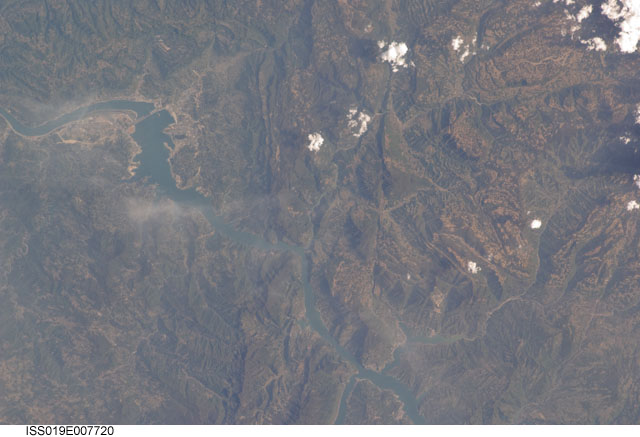
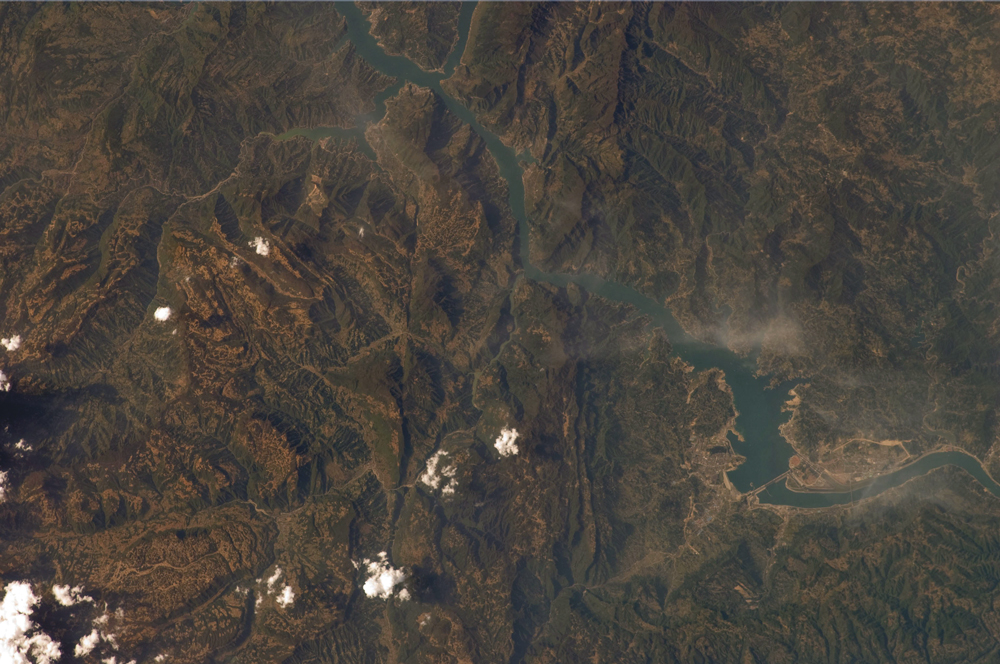
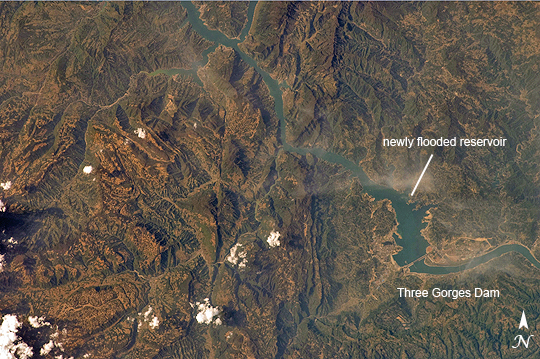
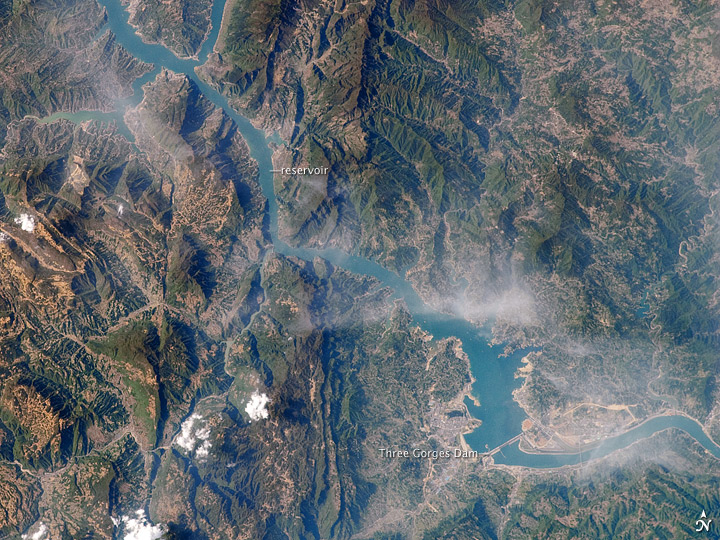
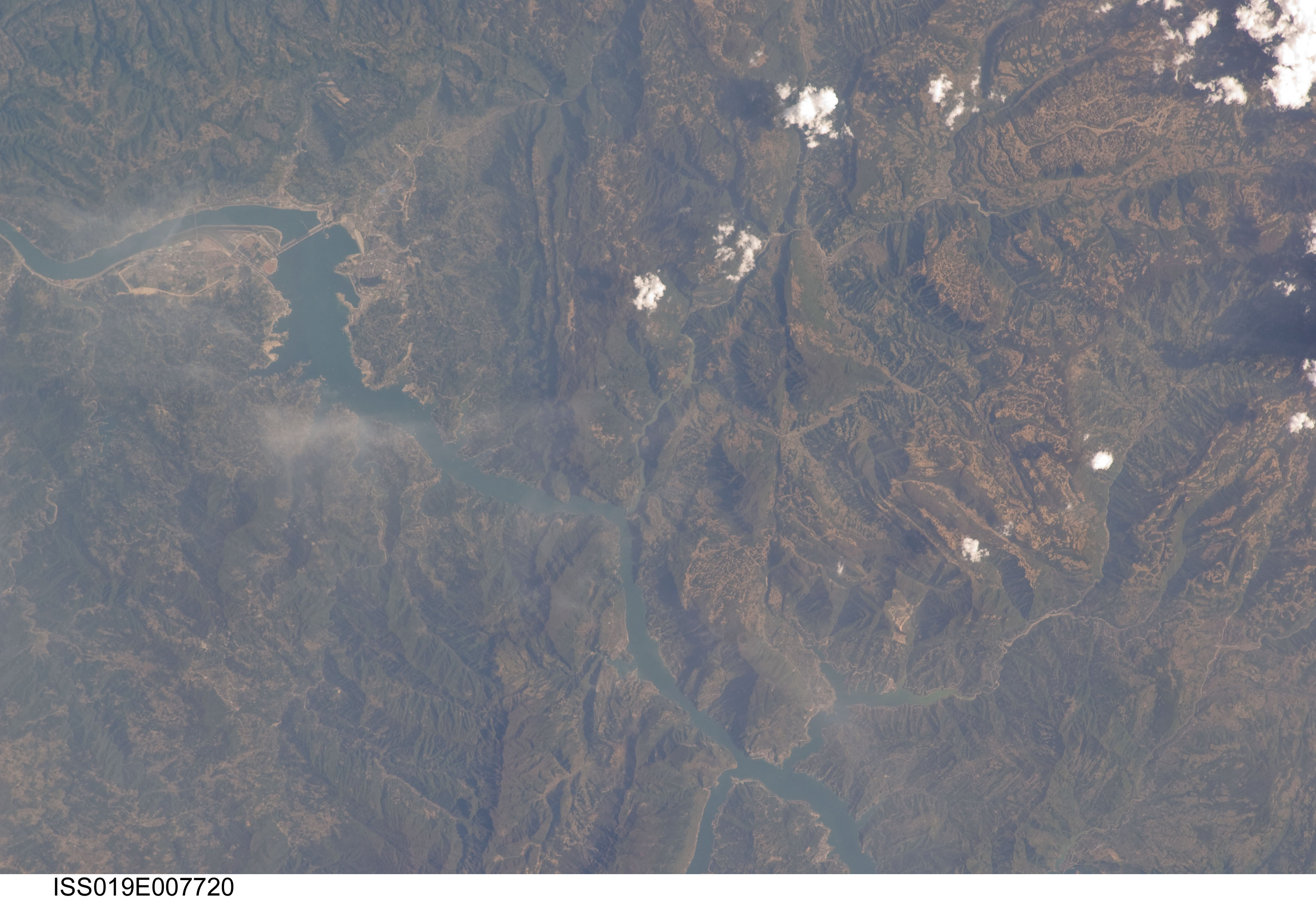
A new reservoir is filling in central China. The Three Gorges Dam on the Yangtze River--the world's largest dam--was completed in 2006, and the river is filling up its valley behind the dam to form a narrow reservoir extending more than 600 kilometers. This image from April 15, 2009, is one of the first images that astronauts on the International Space Station have been able to capture of the flooding behind the dam. The main objective for the dam is to supply water for the largest hydroelectric plant in the world and to help control the devastating floods that plague the lowlands downstream from the dam.
The epic scale of the dam project is matched by the level of controversy it continues to generate. Concerns about major environmental impacts, the relocation of 1.2 million people, and the flooding of 13 cities, more than 1300 villages, archeological locations, and hazardous waste dumps were raised throughout the planning and implementation. Environmental concerns include increased seismicity from the loading of the water, landslides, changed ecosystems, accumulated pollution, increased chances for waterborne diseases, and salinity changes in the Yangtze estuary.
A new reservoir is filling in central China. The Three Gorges Dam on the Yangtze River--the world's largest dam--was completed in 2006, and the river is filling up its valley behind the dam to form a narrow reservoir extending more than 600 kilometers. This image from April 15, 2009, is one of the first images that astronauts on the International Space Station have been able to capture of the flooding behind the dam. The main objective for the dam is to supply water for the largest hydroelectric plant in the world and to help control the devastating floods that plague the lowlands downstream from the dam.
The epic scale of the dam project is matched by the level of controversy it continues to generate. Concerns about major environmental impacts, the relocation of 1.2 million people, and the flooding of 13 cities, more than 1300 villages, archeological locations, and hazardous waste dumps were raised throughout the planning and implementation. Environmental concerns include increased seismicity from the loading of the water, landslides, changed ecosystems, accumulated pollution, increased chances for waterborne diseases, and salinity changes in the Yangtze estuary.