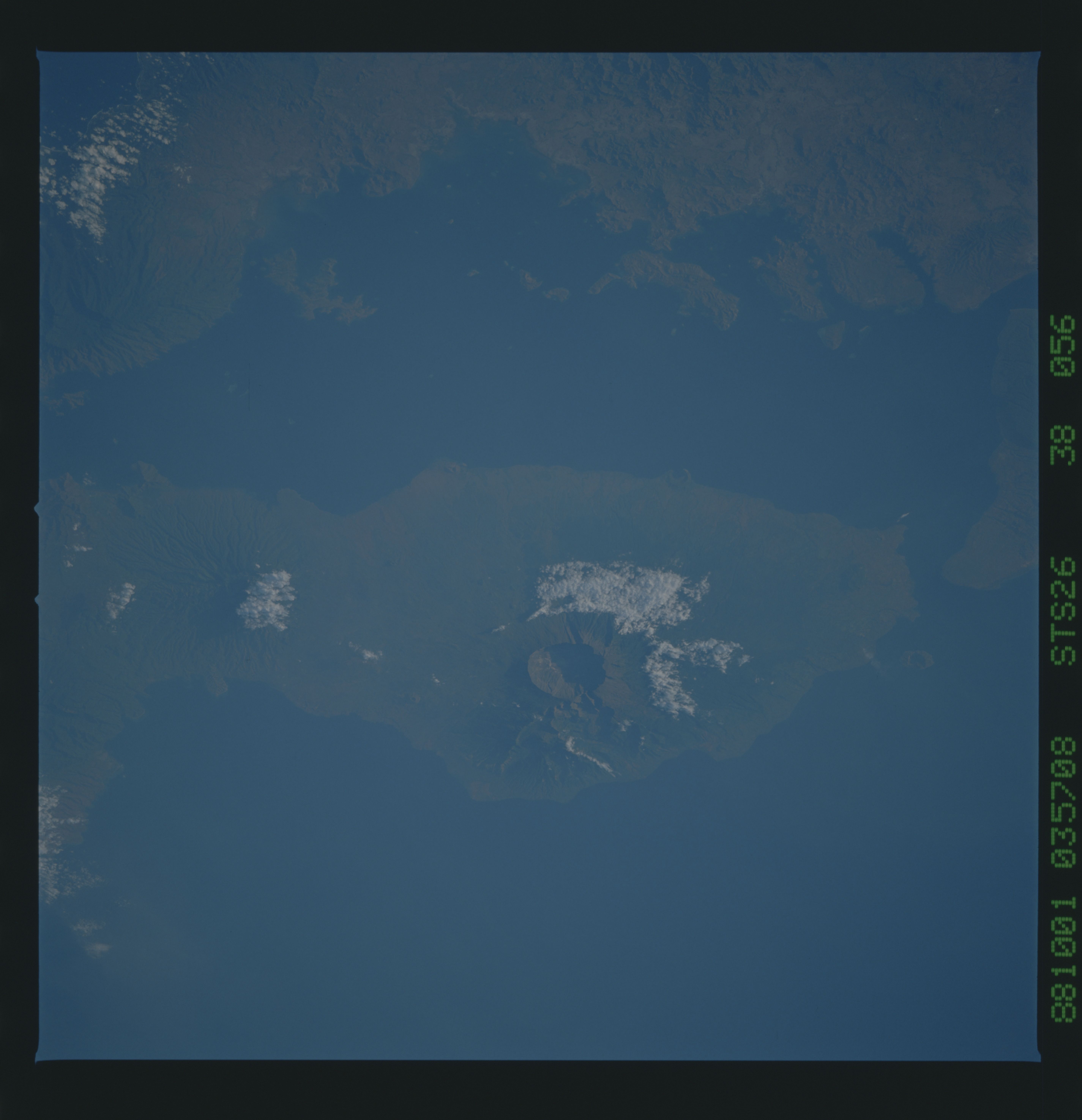
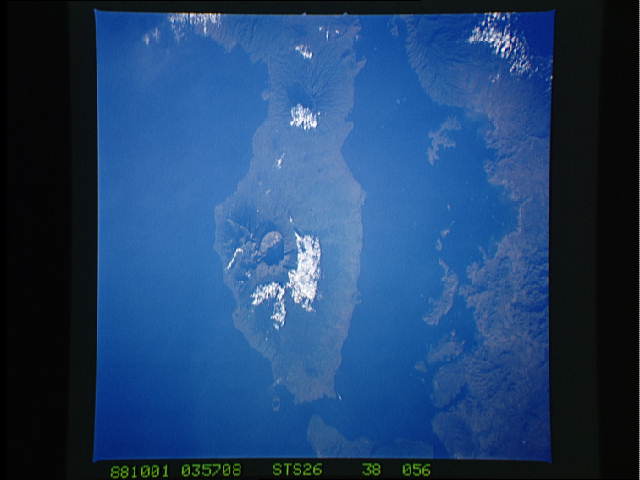
< STS026-38-56 >

| NASA Photo ID | STS026-38-56 |
| Focal Length | 250mm |
| Date taken | 1988.10.01 |
| Time taken | 08:57:08 GMT |
Cloud masks available for this image:
Spacecraft nadir point: 10.2° S, 116.7° E
Photo center point: 8.5° S, 118.0° E
Photo center point by machine learning:
Photo center point: 8.5° S, 118.0° E
Photo center point by machine learning:
Nadir to Photo Center: Northeast
Spacecraft Altitude: 163 nautical miles (302km)
Country or Geographic Name: | INDONESIA |
Features: | SUMBAWA |
| Features Found Using Machine Learning: | |
Cloud Cover Percentage: | 10 (1-10)% |
Sun Elevation Angle: | 16° |
Sun Azimuth: | 269° |
Camera: | Hasselblad |
Focal Length: | 250mm |
Camera Tilt: | 38 degrees |
Format: | 5017: Kodak, natural color positive, Ektachrome, X Professional, ASA 64, standard base |
Film Exposure: | Normal |
| Additional Information | |
| Width | Height | Annotated | Cropped | Purpose | Links |
|---|---|---|---|---|---|
| 5700 pixels | 5900 pixels | No | No | Download Image | |
| 500 pixels | 518 pixels | No | No | Download Image | |
| 640 pixels | 480 pixels | No | No | Download Image |
Download Packaged File
Download a Google Earth KML for this Image
View photo footprint information
No GeoTIFF is available for this photo.Image Caption: Tambora caldera on the island of Sumbawa, Indonesia (8.5S, 118.0E) is a large crater formed in 1815 when a huge volcanic eruption ejected millions of tons debris high into the atmosphere. The particulate matter was blown around the globe by winds, masking much of the Earth's surface from sunlight, lowering global temperatures. Snow fell in New England in June and freezes occurred in the summer of 1816 which became known as the year without a summer.