< STS049-89-38 >
| NASA Photo ID | STS049-89-38 |
| Focal Length | 100mm |
| Date taken | 1992.05.09 |
| Time taken | 19:15:50 GMT |
Resolutions offered for this image:
5230 x 5230 pixels 639 x 639 pixels 5700 x 6000 pixels 500 x 526 pixels 640 x 480 pixels
5230 x 5230 pixels 639 x 639 pixels 5700 x 6000 pixels 500 x 526 pixels 640 x 480 pixels
Cloud masks available for this image:
Spacecraft nadir point: 13.0° N, 90.8° W
Photo center point: 14.0° N, 89.0° W
Photo center point by machine learning:
Photo center point: 14.0° N, 89.0° W
Photo center point by machine learning:
Nadir to Photo Center: Northeast
Spacecraft Altitude: 154 nautical miles (285km)
Country or Geographic Name: | EL SALVADOR |
Features: | SAN SALVADOR, COAST |
| Features Found Using Machine Learning: | |
Cloud Cover Percentage: | 30 (26-50)% |
Sun Elevation Angle: | 71° |
Sun Azimuth: | 287° |
Camera: | Hasselblad |
Focal Length: | 100mm |
Camera Tilt: | 39 degrees |
Format: | 2443: Kodak Aerochrome 2443, color IR, thin base, EA-5 process thru June 1999, E-6 process afterward |
Film Exposure: | Normal |
| Additional Information | |
| Width | Height | Annotated | Cropped | Purpose | Links |
|---|---|---|---|---|---|
| 5230 pixels | 5230 pixels | No | No | Earth From Space collection | Download Image |
| 639 pixels | 639 pixels | No | No | Earth From Space collection | Download Image |
| 5700 pixels | 6000 pixels | No | No | Download Image Download Color Calibration Image for this Image |
|
| 500 pixels | 526 pixels | No | No | Download Image Download Color Calibration Image for this Image |
|
| 640 pixels | 480 pixels | No | No | Download Image |
Download Packaged File
Download a Google Earth KML for this Image
View photo footprint information
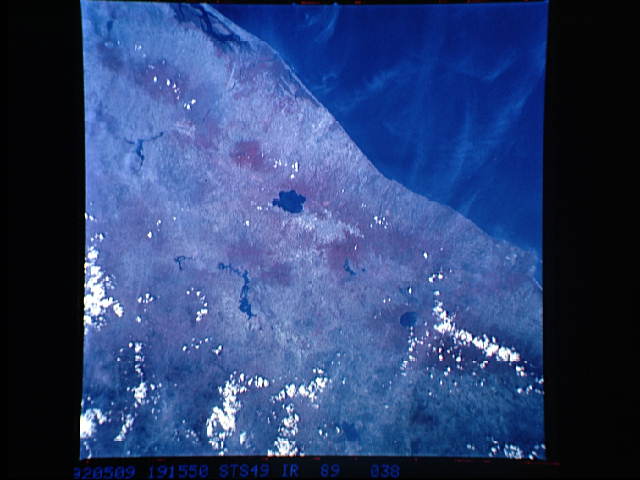
No GeoTIFF is available for this photo.Image Caption: STS049-89-38 San Salvador, El Salvador May 1992
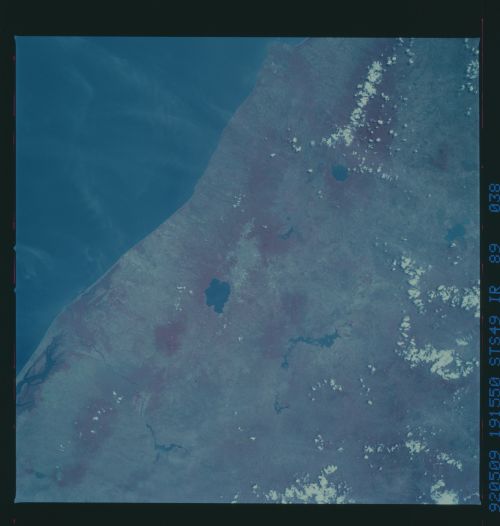
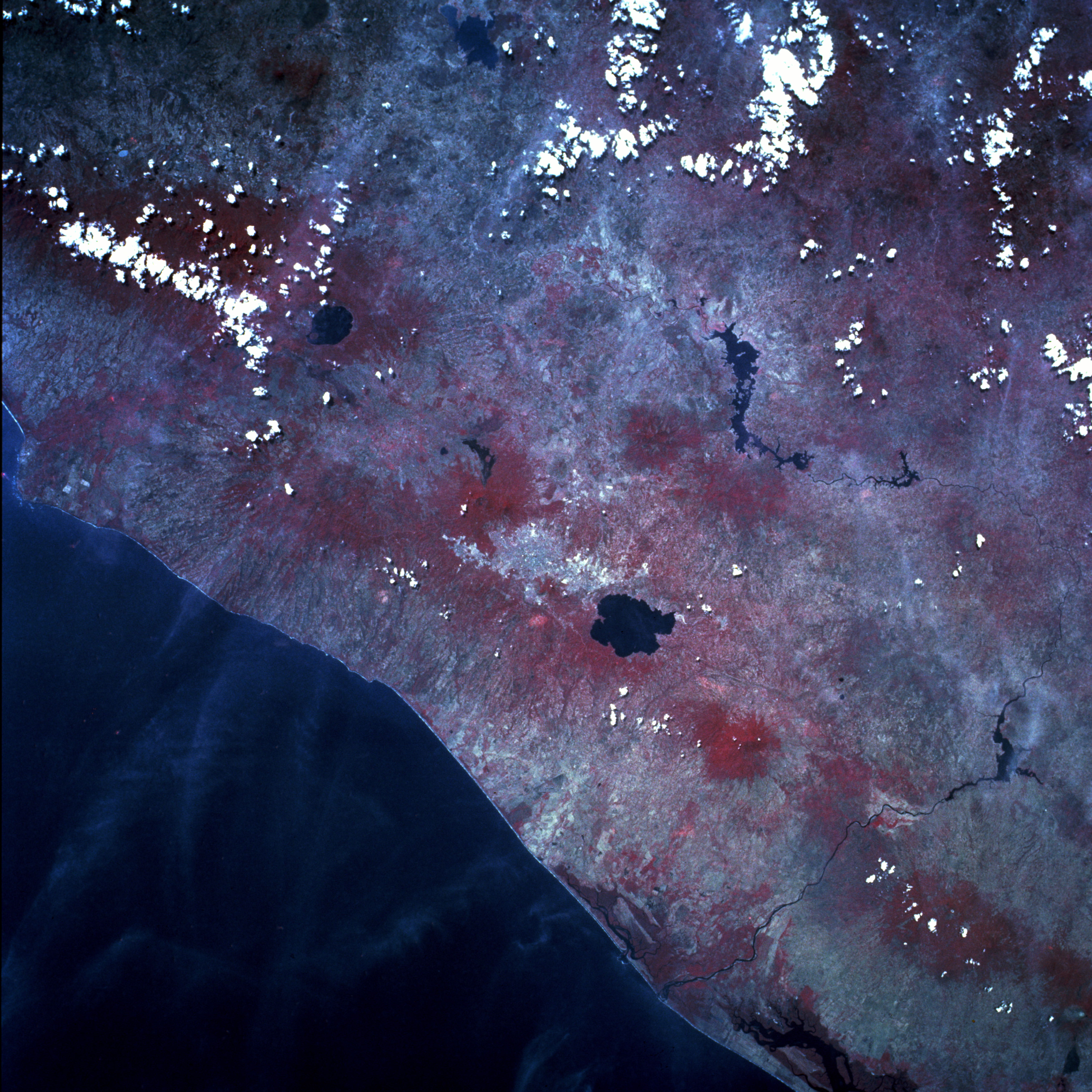
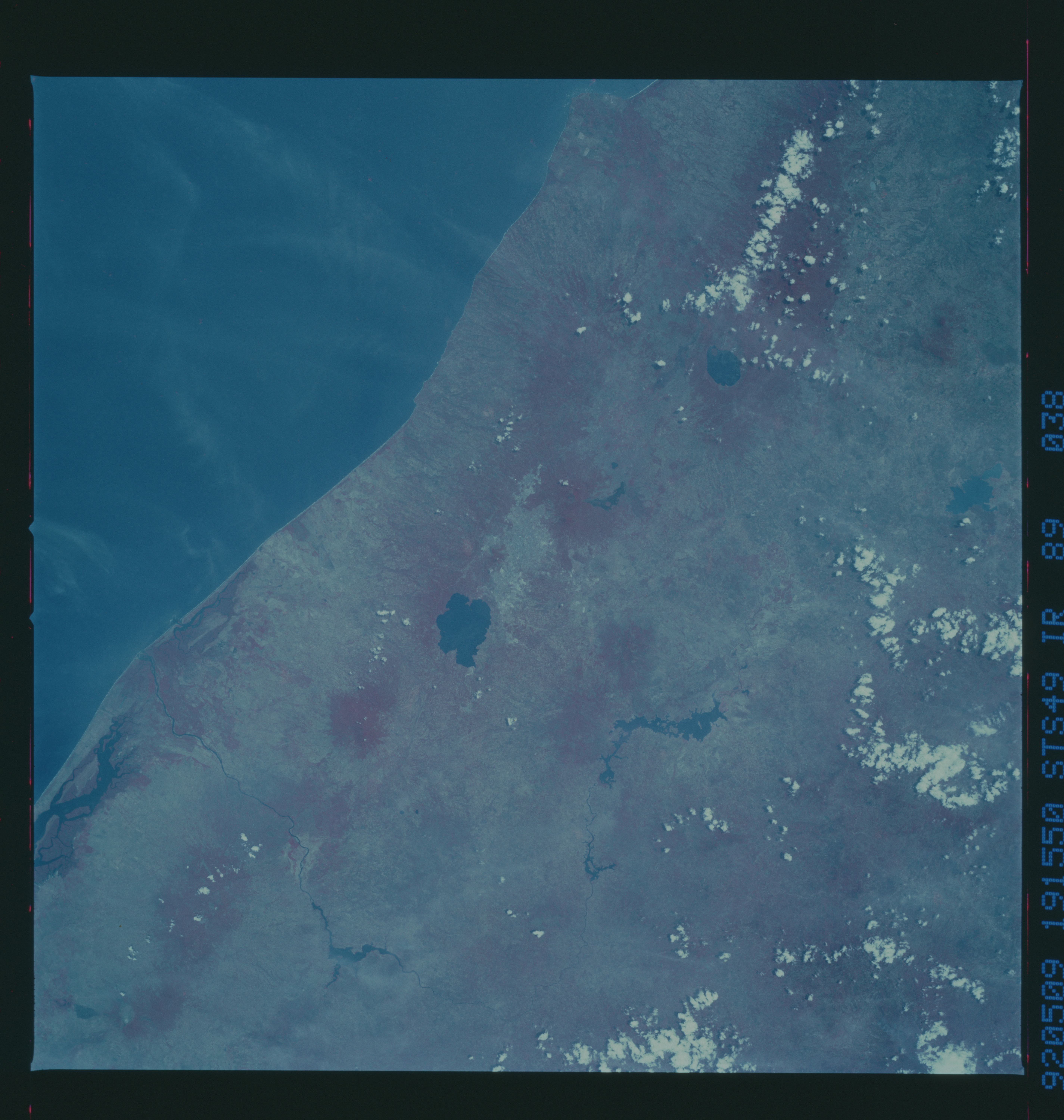
This color infrared photograph of more than half of El Salvador helps to understand why the capital, San Salvador, has been partially or completely destroyed by devastating earthquakes and volcanic activity nine times since 1528--the city (whitish area in the center of the photograph) lies on the northwest-southeast axis of a volcanic range that traverses the country. The reddish color (dense vegetation) that surrounds most of the existing volcanic peaks help identify the main axis of the volcanic range, whose elevations average approximately 4000 feet (1200 meters) above sea level. El Salvador has more than 20 volcanoes; some are still active. San Salvador, with a population of more than 1 million, lies west of Lake Ilopango and 20 miles (32 kilometers) east-southeast of circular Lake Coatepeque--two old calderas filled with water. The elongated body of water north of San Salvador is the Cerron Grande Reservoir, and a smaller reservoir can be seen on the Lempa River east of San Salvador. A very narrow coastal plain is visible along the Pacific Ocean.
This color infrared photograph of more than half of El Salvador helps to understand why the capital, San Salvador, has been partially or completely destroyed by devastating earthquakes and volcanic activity nine times since 1528--the city (whitish area in the center of the photograph) lies on the northwest-southeast axis of a volcanic range that traverses the country. The reddish color (dense vegetation) that surrounds most of the existing volcanic peaks help identify the main axis of the volcanic range, whose elevations average approximately 4000 feet (1200 meters) above sea level. El Salvador has more than 20 volcanoes; some are still active. San Salvador, with a population of more than 1 million, lies west of Lake Ilopango and 20 miles (32 kilometers) east-southeast of circular Lake Coatepeque--two old calderas filled with water. The elongated body of water north of San Salvador is the Cerron Grande Reservoir, and a smaller reservoir can be seen on the Lempa River east of San Salvador. A very narrow coastal plain is visible along the Pacific Ocean.