< STS027-42-18 >

| NASA Photo ID | STS027-42-18 |
| Focal Length | 250mm |
| Date taken | 1988.12.04 |
| Time taken | 13:10:50 GMT |
Cloud masks available for this image:
Spacecraft nadir point: 1.6° S, 91.2° W
Photo center point: 0.0° N, 91.5° W
Photo center point by machine learning:
Photo center point: 0.0° N, 91.5° W
Photo center point by machine learning:
Nadir to Photo Center: North
Spacecraft Altitude: 241 nautical miles (446km)Body: Earth
Country or Geographic Name: | GALAPAGOS ISLANDS |
Features: | ISLA FERNANDINA |
| Features Found Using Machine Learning: | |
Cloud Cover Percentage: | 10 (1-10)% |
Sun Elevation Angle: | 18° |
Sun Azimuth: | 113° |
Camera: | Hasselblad |
Focal Length: | 250mm |
Camera Tilt: | 22 degrees |
Format: | 5036: Kodak, natural color positive, Ektachrome 5036,200 Professional, ASA 200, stand |
Film Exposure: | Normal |
| Additional Information | |
| Width | Height | Annotated | Cropped | Purpose | Links |
|---|---|---|---|---|---|
| 5700 pixels | 5900 pixels | No | No | Download Image | |
| 500 pixels | 518 pixels | No | No | Download Image | |
| 640 pixels | 480 pixels | No | No | Download Image |
Download Packaged File
Download a Google Earth KML for this Image
View photo footprint information
No GeoTIFF is available for this photo.Image Caption:
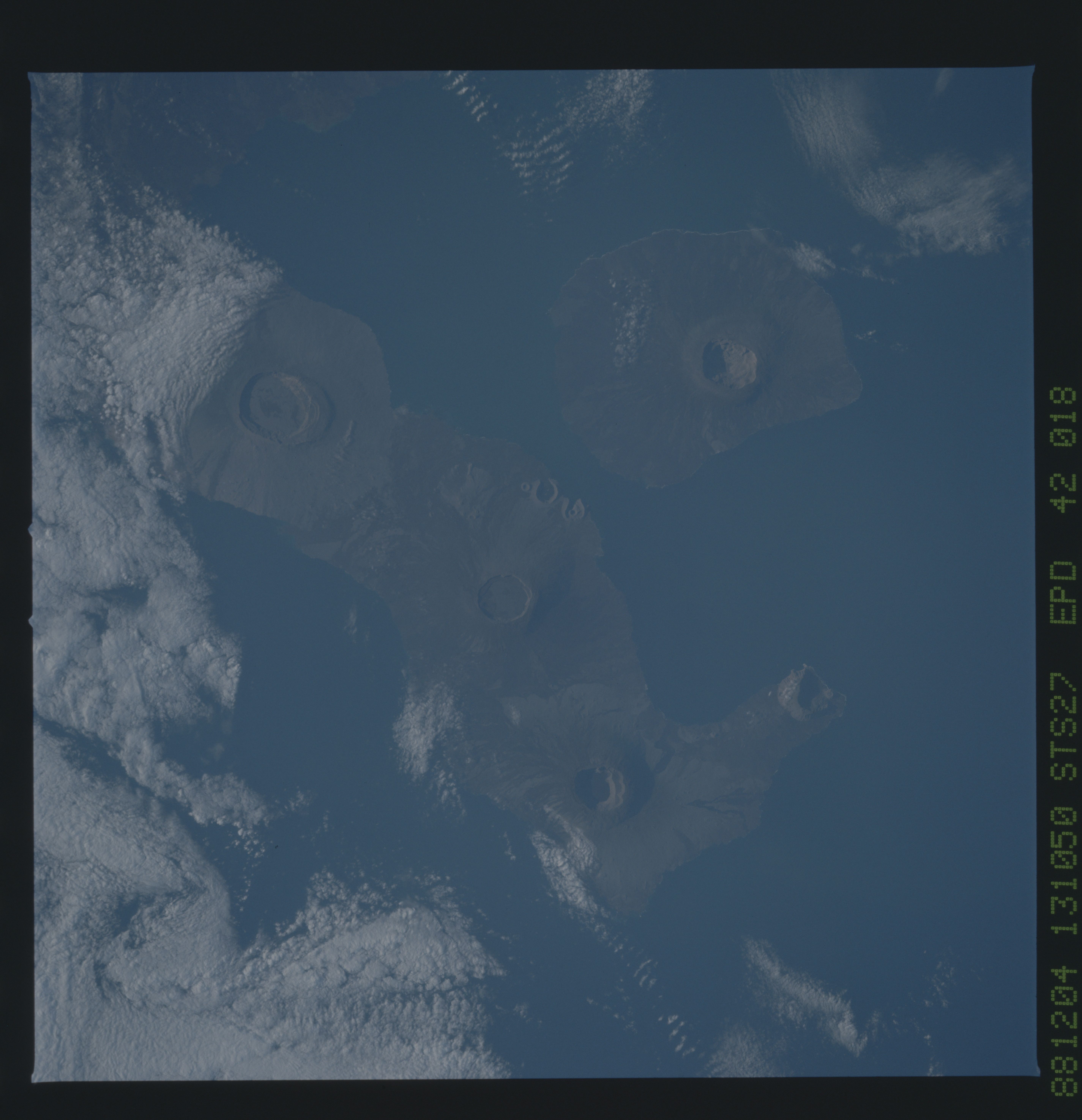
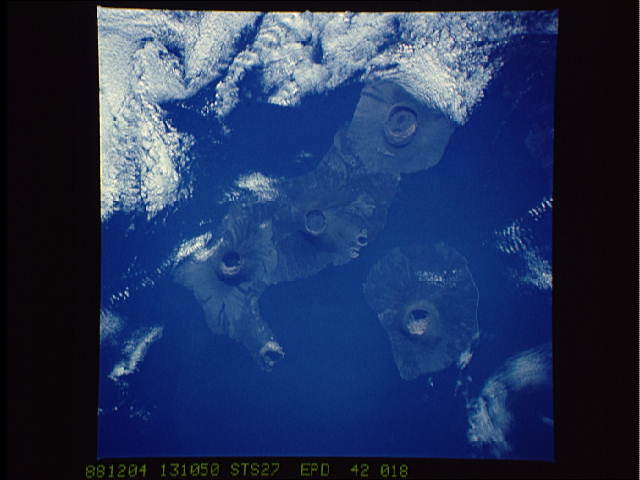
Isla Isabela and Isla Fernandina
This is a more detailed view of the most volcanically active re-
gions of the Galapagos. The photograph, taken in late 1988, docu-
ments the continually changing nature of these volcanic islands.
Compared with that from S17, this photo shows that the summit
crater on Isla Fernandina no longer contains a lake--the first
proof that the crater had experienced renewed activity. Note
the flat-topped shape of the volcanoes. This is distinctive for
the Galapagos hot spot, and the volcanoes have a quite different
morphology than Hawaiian volcanoes, for example. The well
developed summit calderas often fill with lava, but may collapse
with subsequent eruptions. (S27-42-18)
Isla Isabela and Isla Fernandina
This is a more detailed view of the most volcanically active re-
gions of the Galapagos. The photograph, taken in late 1988, docu-
ments the continually changing nature of these volcanic islands.
Compared with that from S17, this photo shows that the summit
crater on Isla Fernandina no longer contains a lake--the first
proof that the crater had experienced renewed activity. Note
the flat-topped shape of the volcanoes. This is distinctive for
the Galapagos hot spot, and the volcanoes have a quite different
morphology than Hawaiian volcanoes, for example. The well
developed summit calderas often fill with lava, but may collapse
with subsequent eruptions. (S27-42-18)