ISS008-E-12390
| NASA Photo ID | ISS008-E-12390 |
| Focal Length | 800mm |
| Date taken | 2004.01.10 |
| Time taken | 18:43:30 GMT |
Resolutions offered for this image:
3032 x 2004 pixels 540 x 357 pixels 3032 x 2064 pixels 639 x 435 pixels
3032 x 2004 pixels 540 x 357 pixels 3032 x 2064 pixels 639 x 435 pixels
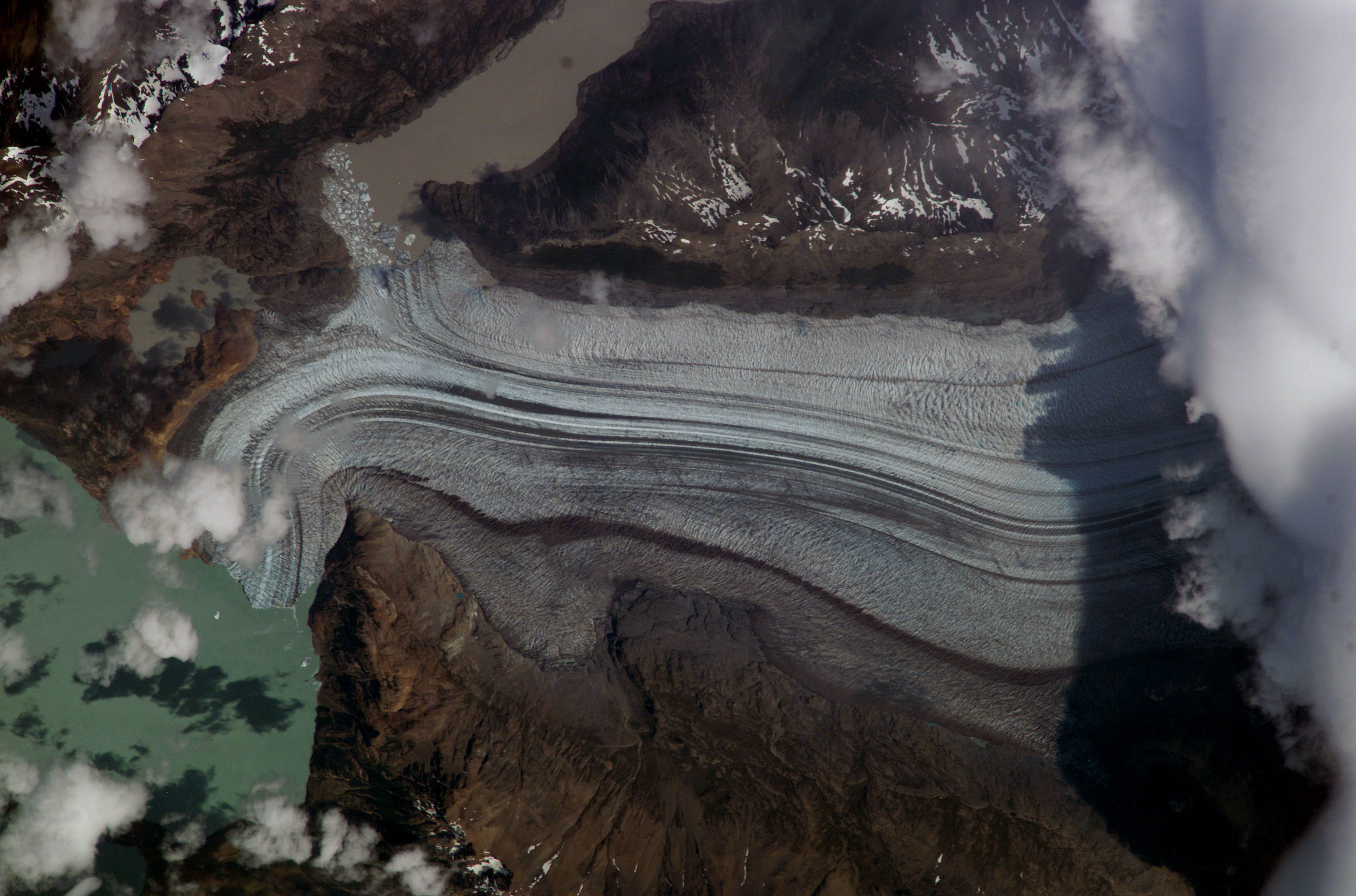
Cloud masks available for this image:
Spacecraft nadir point: 51.4° S, 77.7° W
Photo center point: 49.5° S, 73.0° W
Photo center point by machine learning:
Photo center point: 49.5° S, 73.0° W
Photo center point by machine learning:
Nadir to Photo Center: East
Spacecraft Altitude: 205 nautical miles (380km)
Country or Geographic Name: | ARGENTINA |
Features: | VIEDMA GLACIER, MORAINES, LAKES |
| Features Found Using Machine Learning: | |
Cloud Cover Percentage: | 10 (1-10)% |
Sun Elevation Angle: | 56° |
Sun Azimuth: | 322° |
Camera: | Kodak DCS760c Electronic Still Camera |
Focal Length: | 800mm |
Camera Tilt: | High Oblique |
Format: | 3060E: 3060 x 2036 pixel CCD, RGBG array |
Film Exposure: | |
| Additional Information | |
| Width | Height | Annotated | Cropped | Purpose | Links |
|---|---|---|---|---|---|
| 3032 pixels | 2004 pixels | No | No | Earth From Space collection | Download Image |
| 540 pixels | 357 pixels | No | No | Earth From Space collection | Download Image |
| 3032 pixels | 2064 pixels | No | No | Download Image | |
| 639 pixels | 435 pixels | No | No | Download Image |
Download Packaged File
Download a Google Earth KML for this Image
View photo footprint information
Download a GeoTIFF for this photo
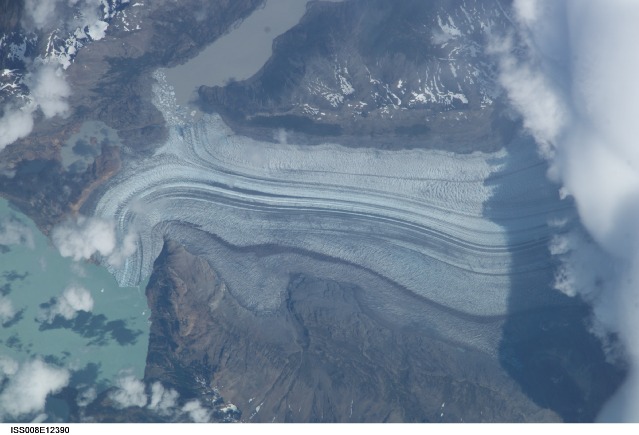
Image Caption: Viedma Glacier, Southern Argentina:
This detailed view was taken with an 800 mm lens from the International Space Station on 10 January, 2004. The image shows the lower end of the Viedma Glacier that flows into Lake Viedma, one of three major glacially formed lakes on the Patagonian side of the southern Andean ice sheet, at 50 degrees South.
The image reveals the slender dark lines of rock material (moraine) which is carried in the slowly flowing ice. Lighter lines at right angles are patterns of crevasses. The glacier diverges into two lakes where calved icebergs can be seen floating in the lakes.
The glacier here is about 1.8 km wide. The thickest moraine parallels the north side of the valley. This moraine separates lighter-colored ice to the south (in the main part of the glacier) from darker ice along the northern margin (between arrows). The ice is darker due to greater proportions of rock material mixed with it. Ice on the northern margin flows into embayments in the valley wall (top center and top left), resulting in a greater flow distance and hence more time for the ice to be impregnated with rocky material from the valley floor and walls.
This detailed view was taken with an 800 mm lens from the International Space Station on 10 January, 2004. The image shows the lower end of the Viedma Glacier that flows into Lake Viedma, one of three major glacially formed lakes on the Patagonian side of the southern Andean ice sheet, at 50 degrees South.
The image reveals the slender dark lines of rock material (moraine) which is carried in the slowly flowing ice. Lighter lines at right angles are patterns of crevasses. The glacier diverges into two lakes where calved icebergs can be seen floating in the lakes.
The glacier here is about 1.8 km wide. The thickest moraine parallels the north side of the valley. This moraine separates lighter-colored ice to the south (in the main part of the glacier) from darker ice along the northern margin (between arrows). The ice is darker due to greater proportions of rock material mixed with it. Ice on the northern margin flows into embayments in the valley wall (top center and top left), resulting in a greater flow distance and hence more time for the ice to be impregnated with rocky material from the valley floor and walls.