< STS090-739-79 >
| NASA Photo ID | STS090-739-79 |
| Focal Length | 100mm |
| Date taken | 1998.04.27 |
| Time taken | 23:44:05 GMT |
Resolutions offered for this image:
540 x 400 pixels 2536 x 2572 pixels 5700 x 5900 pixels 483 x 500 pixels 5621 x 5621 pixels 400 x 405 pixels
540 x 400 pixels 2536 x 2572 pixels 5700 x 5900 pixels 483 x 500 pixels 5621 x 5621 pixels 400 x 405 pixels

Cloud masks available for this image:
Spacecraft nadir point: 32.6° N, 130.5° E
Photo center point: 32.5° N, 131.0° E
Photo center point by machine learning:
Photo center point: 32.5° N, 131.0° E
Photo center point by machine learning:
Nadir to Photo Center: East
Spacecraft Altitude: 133 nautical miles (246km)
Country or Geographic Name: | JAPAN |
Features: | KYUSHU, AMAKUSA SEA |
| Features Found Using Machine Learning: | |
Cloud Cover Percentage: | 15 (11-25)% |
Sun Elevation Angle: | 39° |
Sun Azimuth: | 98° |
Camera: | Hasselblad |
Focal Length: | 100mm |
Camera Tilt: | 13 degrees |
Format: | 5069: Kodak Elite 100S, E6 Reversal, Replaces Lumiere, Warmer in tone vs. Lumiere |
Film Exposure: | Normal |
| Additional Information | |
| Width | Height | Annotated | Cropped | Purpose | Links |
|---|---|---|---|---|---|
| 540 pixels | 400 pixels | Yes | Yes | Earth From Space collection | Download Image |
| 2536 pixels | 2572 pixels | No | Yes | NASA's Earth Observatory web site | Download Image |
| 5700 pixels | 5900 pixels | No | No | Download Image Download Color Calibration Image for this Image |
|
| 483 pixels | 500 pixels | No | No | Download Image Download Color Calibration Image for this Image |
|
| 5621 pixels | 5621 pixels | Download Image | |||
| 400 pixels | 405 pixels | No | Yes | Photographic Highlights | Download Image |
Download Packaged File
Download a Google Earth KML for this Image
View photo footprint information
No GeoTIFF is available for this photo.Image Caption: STS090-739-79 Ariake Sea, Japan April 1998
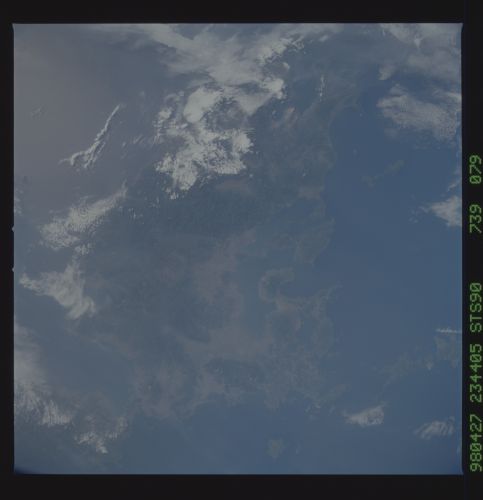
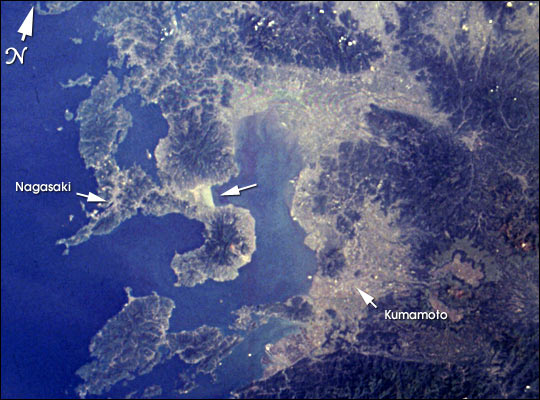
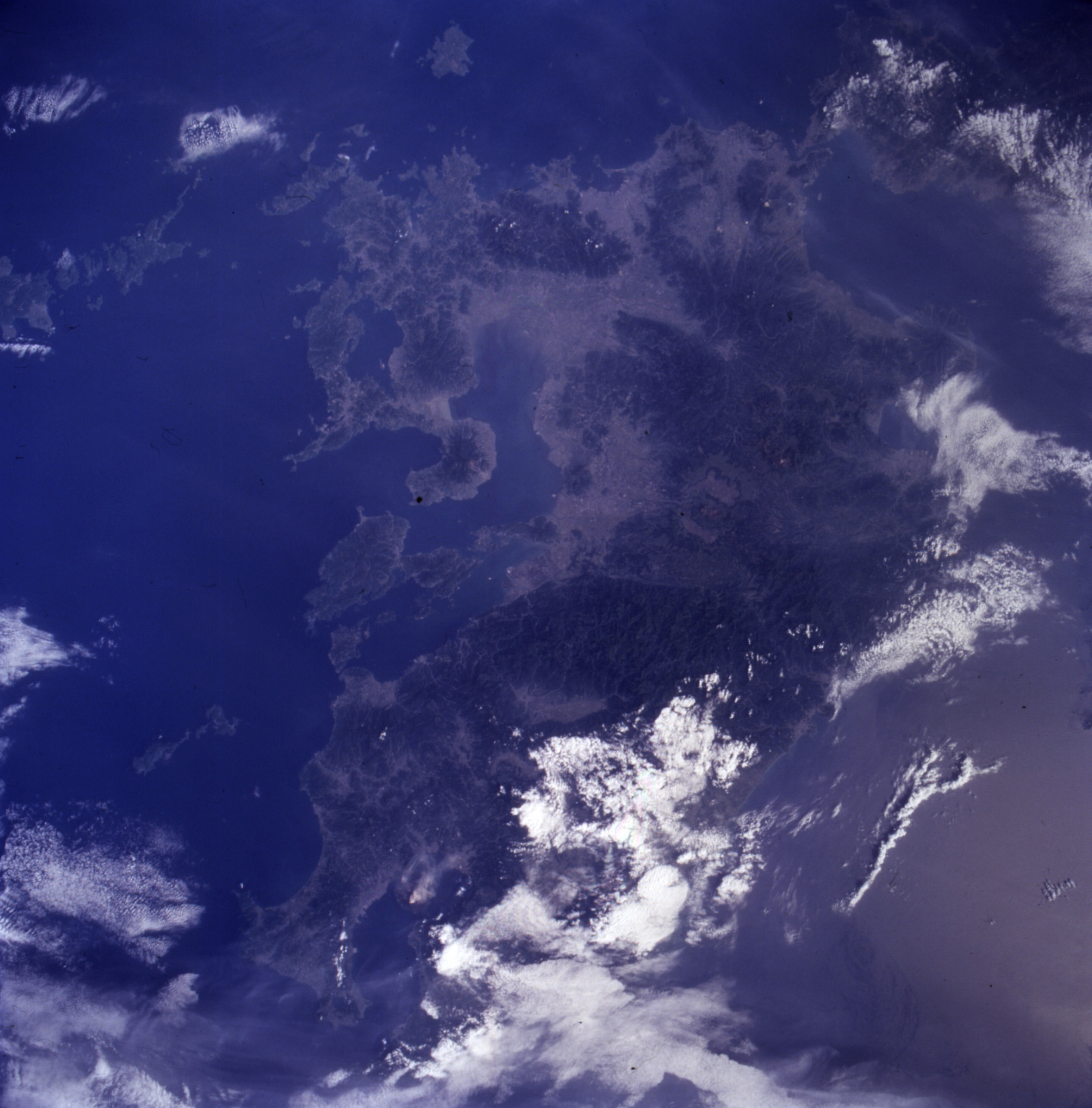
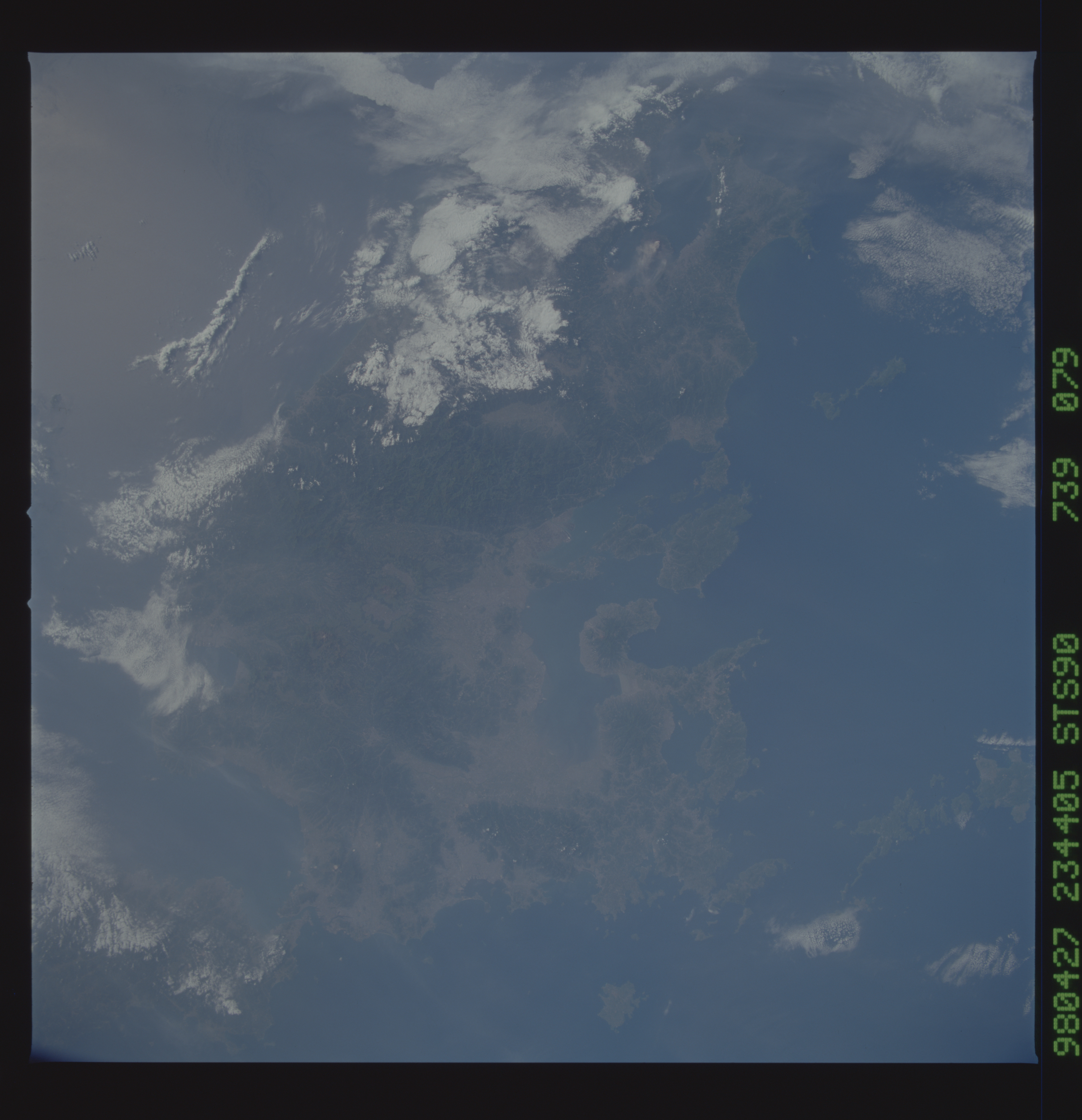
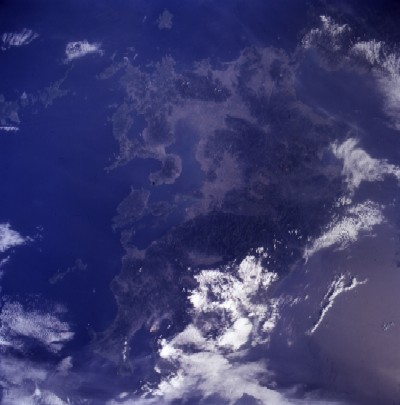
The Isahaya Bay Reclamation project separated approximately 3,000 hectares of tidal flats from the Ariake Sea in 1997. This photograph was taken from the Space Shuttle on April 27, 1998, a year after the sea wall separating Isahaya Bay from the rest of the Ariake Sea was closed. The reflective white area (center arrow) shows the straight edge of the sea wall and the drying tidal flats.
The project has been highly controversial because of concerns by environmental groups about the loss of wetland habitat. Hirofumi Yamashita was awarded the 1998 Goldman Environmental Prize for his scientific efforts documenting the ecological value of the bay and his grassroots activism trying to stop the closing of the sea wall. In 1992, he catalyzed other organizations to form the Japan Wetlands Action Network, composed of 70 grassroots and national conservation organizations, and became its spokesperson. Yamashita died in July 2000.
According to a January 2001 Reuters News Article, fishermen have been demonstrating at the sluice gates in support of a government panel's recommendation that the gates be opened. Seaweed growers believe the reduced availability of nori (seaweed) produced in the Ariake Sea is tied to environmental damage caused by the building of the seawall.
The Isahaya Bay Reclamation project separated approximately 3,000 hectares of tidal flats from the Ariake Sea in 1997. This photograph was taken from the Space Shuttle on April 27, 1998, a year after the sea wall separating Isahaya Bay from the rest of the Ariake Sea was closed. The reflective white area (center arrow) shows the straight edge of the sea wall and the drying tidal flats.
The project has been highly controversial because of concerns by environmental groups about the loss of wetland habitat. Hirofumi Yamashita was awarded the 1998 Goldman Environmental Prize for his scientific efforts documenting the ecological value of the bay and his grassroots activism trying to stop the closing of the sea wall. In 1992, he catalyzed other organizations to form the Japan Wetlands Action Network, composed of 70 grassroots and national conservation organizations, and became its spokesperson. Yamashita died in July 2000.
According to a January 2001 Reuters News Article, fishermen have been demonstrating at the sluice gates in support of a government panel's recommendation that the gates be opened. Seaweed growers believe the reduced availability of nori (seaweed) produced in the Ariake Sea is tied to environmental damage caused by the building of the seawall.