< STS087-708-10 >
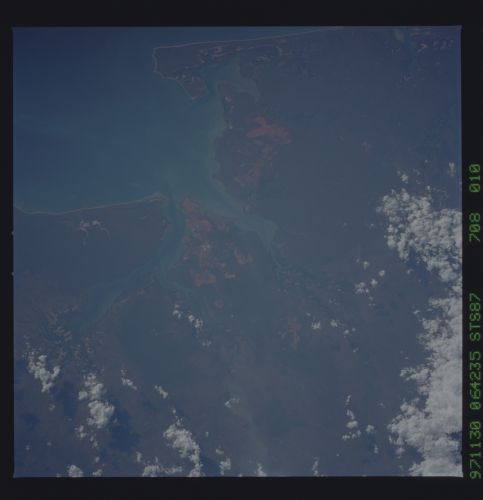
| NASA Photo ID | STS087-708-10 |
| Focal Length | 250mm |
| Date taken | 1997.11.30 |
| Time taken | 06:42:35 GMT |
Cloud masks available for this image:
Spacecraft nadir point: 13.5° S, 143.2° E
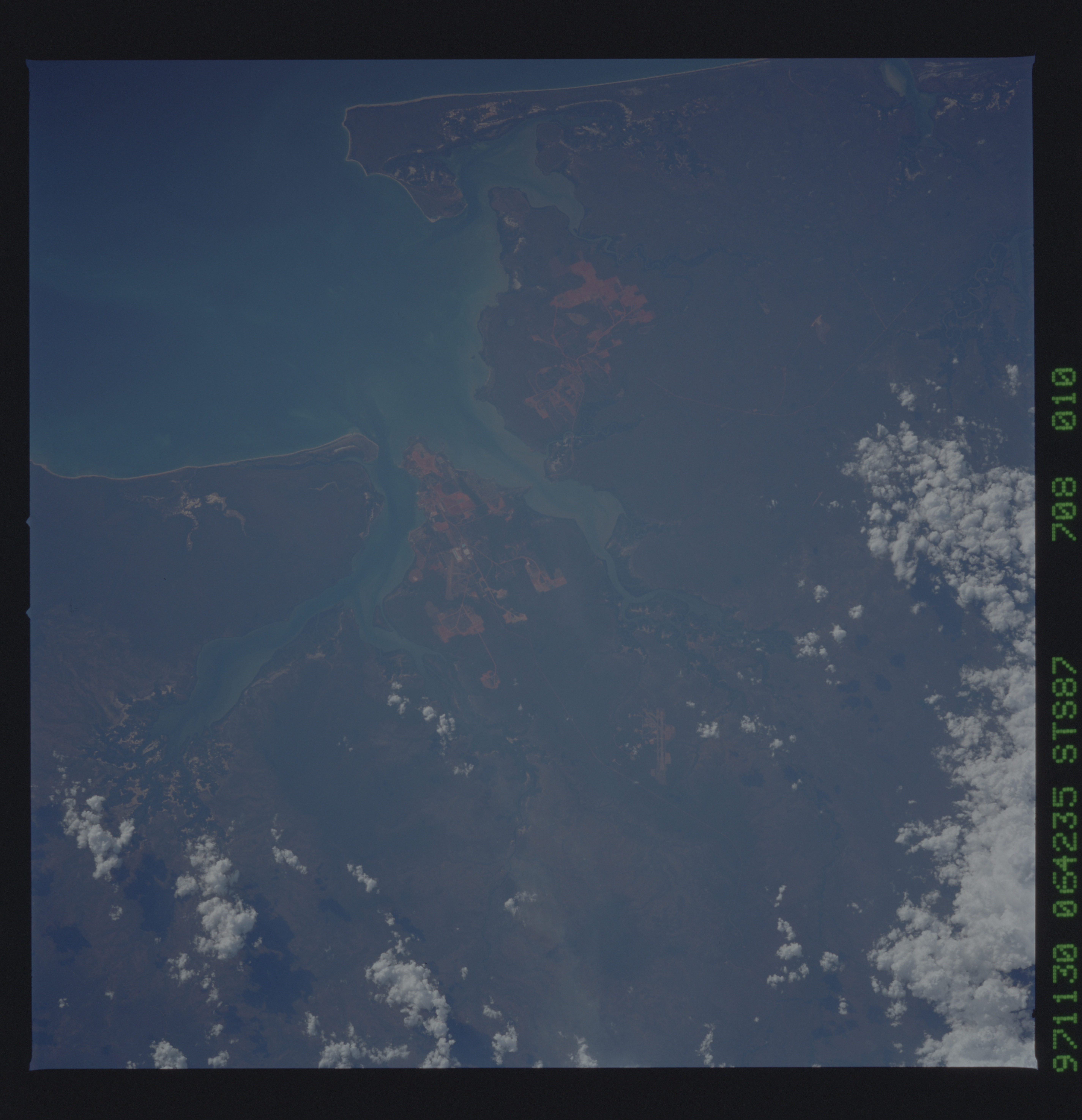
Photo center point: 12.5° S, 142.0° E
Photo center point by machine learning:
Photo center point: 12.5° S, 142.0° E
Photo center point by machine learning:
Nadir to Photo Center: Northwest
Spacecraft Altitude: 152 nautical miles (282km)
Country or Geographic Name: | AUSTRALIA-Q |
Features: | ALBATROSS BAY, LAND USE |
| Features Found Using Machine Learning: | |
Cloud Cover Percentage: | 15 (11-25)% |
Sun Elevation Angle: | 26° |
Sun Azimuth: | 252° |
Camera: | Hasselblad |
Focal Length: | 250mm |
Camera Tilt: | 32 degrees |
Format: | 5069: Kodak Elite 100S, E6 Reversal, Replaces Lumiere, Warmer in tone vs. Lumiere |
Film Exposure: | Normal |
| Additional Information | |
| Width | Height | Annotated | Cropped | Purpose | Links |
|---|---|---|---|---|---|
| 5700 pixels | 5900 pixels | No | No | Download Image Download Color Calibration Image for this Image |
|
| 483 pixels | 500 pixels | No | No | Download Image Download Color Calibration Image for this Image |
Download Packaged File
Download a Google Earth KML for this Image
View photo footprint information
No GeoTIFF is available for this photo.Image Caption: Weipa, Aboriginal community and mining town, northern Queensland, Australia, on the northwestern coast of Cape York Peninsula; it lies on Albatross Bay at the estuaries of the Hey, Embley, and Mission rivers, facing the Gulf of Carpentaria. In 1802 the explorer Matthew Flinders noted the red cliffs that extended for 100 mi (160 km) along the coast. It was not until 1902 that these reddish deposits were identified as bauxite, the ore of aluminum. When their potential as one of the world's largest reserves (estimated at 3,000,000,000 tons) was recognized, exploitation began, and the town of Weipa was built, beginning in 1956, to house the workers. It was the first settlement established in the area since a Presbyterian mission station had been founded there in the 1890s. Almost 10,500,000 tons of ore are taken annually from the opencut mine, vividly portrayed in the photo, and conveyed to ships in the bay; about one-half goes to aluminum refineries at Gladstone (Queensland), and the rest is exported to Japan, Europe and North America. The town, with air connections to Cairns, 400 mi southeast, derives its name from an Aboriginal term meaning "hunting ground." Pop. (1981) 2,433.